Fair Chance in Employment Act Clears Committee Vote
The Fair Chance in Employment Act was recently reported favorably out of the Joint Committee on Labor and Workforce Development.
Read More about Fair Chance in Employment Act Clears Committee Vote
The Fair Chance in Employment Act was recently reported favorably out of the Joint Committee on Labor and Workforce Development.
Read More about Fair Chance in Employment Act Clears Committee Vote
NCLC urges the CFPB to finalize a rule that would establish supervisory authority over larger nonbank providers of (1) money-transfer services for incarcerated people and their loved ones and (2) prepaid cards for people being released from prison or jail, known as “debit release cards” or “release cards.”
Governor Maura Healey signed a bill establishing Massachusetts as the fifth state to make prison phone calls free statewide and the first state to include provisions for free calls from county jails.
A new report from the National Consumer Law Center explains that the screening process is riddled with errors and bias that disproportionately harms Black and Latino/Hispanic renters.
Read More about New Report Examines How Abuse and Bias in Tenant Screening Harm Renters
Landlords in the United States almost always engage in some form of screening of rental applicants. This screening often involves reports or scores purchased from specialized tenant screening consumer reporting agencies (CRAs). The reports typically combine information about eviction filings, criminal records, and credit history. Often the reports include a score or recommendation based on these records, and in some cases, this score or recommendation is the only information conveyed to the landlord.
Massachusetts is poised to become the third state this year and fifth state overall to make prison calls free.
NCLC joined reply comments to the Federal Communications Commission (FCC) regarding incarcerated people’s communications services, implementation of the Martha Wright-Reed Act, and rates for interstate inmate calling services. Among other things, the Martha Wright-Reed Act directs the FCC to ensure that companies providing communication services to people who are incarcerated are no longer able to…
NCLC joined reply comments to the Federal Communications Commission (FCC), submitted on July 12, 2023, regarding the FCC’s implementation of the Martha Wright-Reed Just and Reasonable Communications Act of 2022. Among other things, the Martha Wright-Reed Act directs the FCC to ensure that companies providing communication services to people who are incarcerated are no longer…
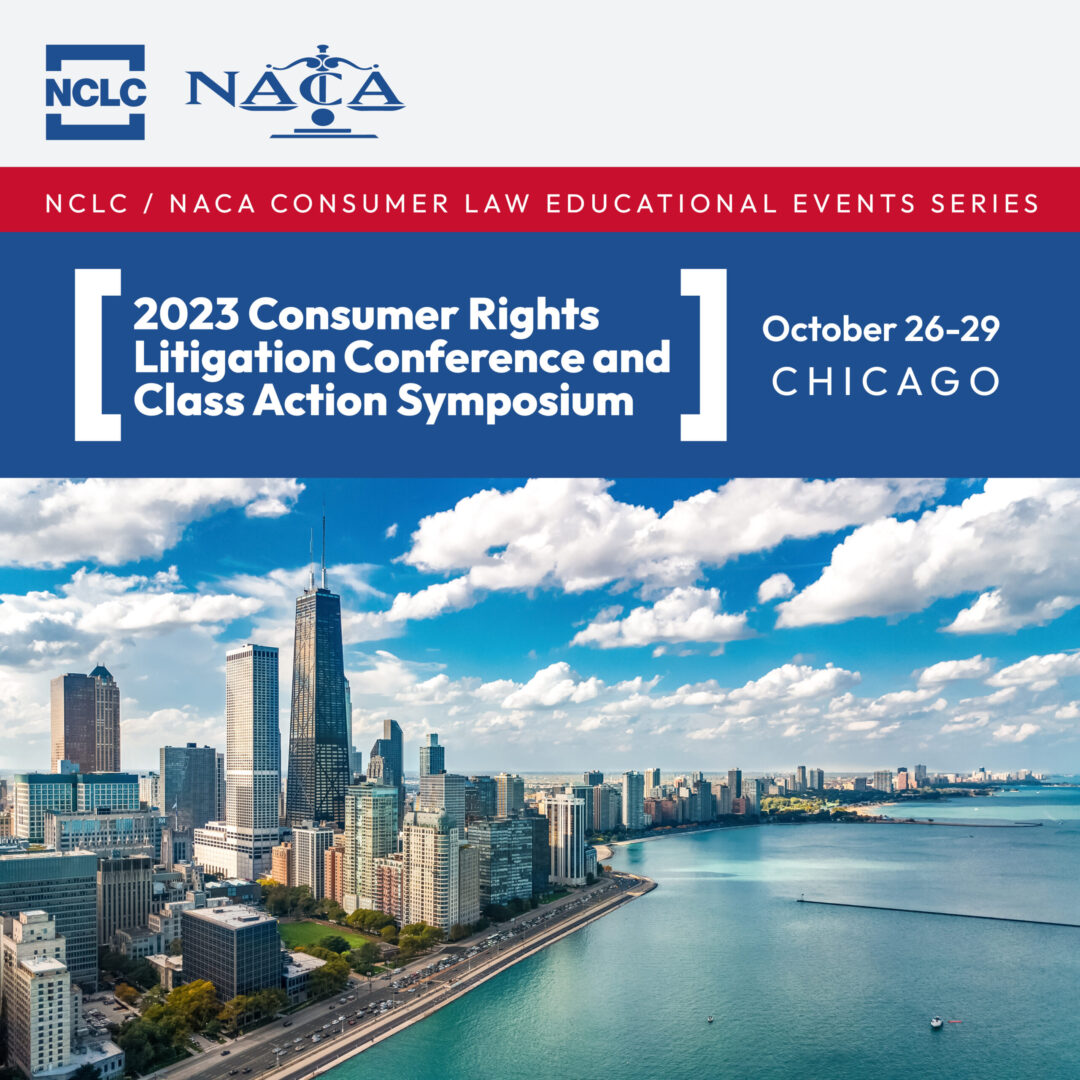
Join us this year at the 31st Consumer Rights Litigation Conference! The Consumer Rights Litigation Conference (CRLC) is, and has been for over three decades, the nation’s largest and most comprehensive gathering of attorneys and advocates representing consumers – a convening of, by, and for the entire consumer law community.
On Mar. 2, 2023, Caroline Cohn sat down with the hosts of Breakthrough News’ The Freedom Side podcast to discuss how incarcerated people and their families are subject to some of the most exploitative fees for basic necessities.
Read More about The Freedom Side Podcast: Caroline Cohn Discusses Junk Fees and Mass Incarceration
NCLC writes to express our continued concern about the Treasury Department’s practice of using the Treasury Offset Program (TOP) to reduce or eliminate payments made through refundable Child Tax Credits (CTC) and Earned Income Tax Credits (EITC) when paid as part of a federal tax refund. These tax credits are intended to support families and…
Please support NCLC's work to advance consumer rights and economic justice with a tax-deductible contribution today!
Donate